
For the test engineer there is no guarantee that the software he will be operating with will be working the first time.
It should be ready and prepared to go from interpretation, modification, maintenance to scalability in a test station. There are different situations that arise within engineering groups when it comes to software management.
Below, we share some best practices for software management based on experience and feedback from our customers.
- Be clear about the scope and limitations of the software you will be working with.
Today's enterprise software can even be complete platforms that work together to provide synchronized and fully coordinated supply chains, production lines and services. It is very important for test groups to be clear about the scope and limitations of the technology they are working with before getting into the selection, editing and implementation process.
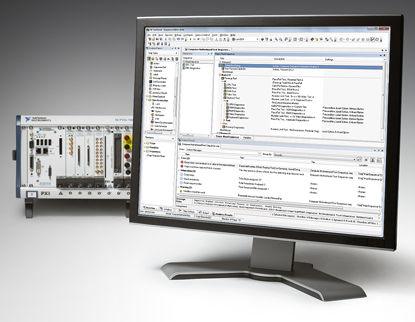
A very clear example is the use of a software like TestStand. Many times our customers use TestStand for applications that can be easily solved with LabVIEW or even C#. It is very important to know how to differentiate which software platform to use according to the production requirements.
- Knowledge of Different Software Platforms
Also in the manufacturing industry in Mexico there are very stable platforms that are implemented, such as C# environments, NI LabVIEW, NI TestStand, Python, among others. In Lab it Studio we have customized training in these software packages and to evolve their test engineers and / or production support to be self-sufficient in the development, maintenance and modification of their programs.
- Source code documentation and scalability
For all leaders and managers of test, manufacturing or quality groups, it is of utmost importance to train and require the personnel in charge of code development their own code documentation, as well as the documentation linked to the project as the case may be.
The lack of this type of requirement and its follow-up compromises the time invested and often generates long delays and inefficiencies that result in costs for the company that could have been prevented.
Subsequent to code development, code maintenance is of utmost importance. Maintenance can be linked to documentation updates, references to libraries, databases, test sequencers, etc.
- Duplicity of code
Lacking a central repository of content, it lends itself to constantly reinventing the wheel and generating patches. Sometimes there are processes in the software that we have already developed, however, the same lack of communication between the groups causes duplication of information and efforts. It evolves that typical behavior of "if it already pulls, don't move it".
- Code Debugging
In order to address this point it is important to be familiar with the programming environment you are working with. Mostly there are tools within the same platform for help and code debugging that are rarely used.
In the same way the different hardware tools of the main brands include code samples of the main platforms used today within the manufacturing industry to make the implementation of a test system as agile as possible.
- Software Version Control
Nowadays, processes in industries are regulated by different standards. For software management, there are standards linked to processes that are mostly not implemented and are unknown. An example of this is, for the automotive sector in Mexico the IATF 16949:2016 standard governs management processes in software control and entails the implementation of a platform for software control.
For all the above mentioned points and with the purpose of having a correct management of the software that is implemented within the companies, it is recommended to implement a platform for software version control.
Lab it Studio has training to lead test groups in a process of accompaniment to also ensure a successful implementation of software projects. There are two main architectures used for a software version control implementation: GIT and SVN.